And, but, because or so? How to choose the right linking word
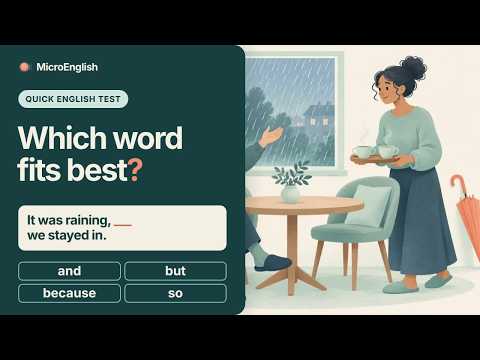
Short sentences are easy. Joining them is where English starts to sound natural, and where many learners stop and guess. Four small words do most of the work: and, but, because and so. The trick is to ask one question: what is the second idea doing?
Ask what the second idea does
- And adds another fact that goes in the same direction.
- But shows a contrast or a surprise.
- Because gives the reason for the first idea.
- So shows the result of the first idea.
Four examples
- I bought some bread and I made sandwiches for lunch. (addition)
- I was tired, but I finished my homework. (contrast)
- She stayed at home because it was raining. (reason)
- It was raining, so she stayed at home. (result)
Look at examples 3 and 4. They describe the same situation. Because comes just before the reason; so comes just before the result. If you can swap the two halves and switch the word, you chose the right one.
Two quick tips
Put a comma before but and so when they join two full sentences. You usually don't need a comma before because. And don't leave a because clause on its own: "Because it was raining." is only half a sentence. Say "Because it was raining, she stayed at home." instead.
Watch the video
Hear these linking words in everyday messages in the short video lesson: watch "Choose and, but, because, or so" on YouTube.
Practise it free on MicroEnglish: listen, choose the right word and build your own sentences in a few minutes.
Follow MicroEnglish: all our channels are on one page, https://microenglish.com/social/


Comments
Post a Comment